

Displacement, Nostalgia and the Uncanny
"I pity the poor immigrant who wishes he would've stayed home."
— Bob Dylan (1967)
“Minds that have been unhinged from their old faith and love have perhaps sought this Lethean influence of exile in which the past becomes dreamy because its symbols have all vanished, and the present too is dreamy because it is linked with no memories.”
— George Eliot, Silas Marner (1861)
“In elderly people stranded not only outside the border of their country but outside that of their own lives, nostalgia evolves into an extraordinarily complex organ, which functions continuously, and its secretion compensates for all that has been lost; or else it becomes a fatal tumor on the soul that makes it painful to breathe, or sleep, and associate with carefree foreigners.”
— Vladimir Nabokov, “Lik” (1938)
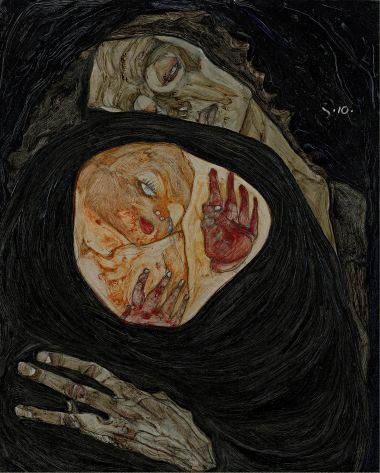
The experience of displacement renders linearity and rationality obsolete. By its very nature, this experience not only disrupts the continuity of space, time and being oneself, but also severs the in-between cultural landscape of home, while the host country’s tastes, smells, climate and customs remain alien and are often experienced as an assault on senses. The displacement often brings about the semi-psychotic states of mind that catapult the newcomers back to the familiar at the risk of them being mutated into pillars of salt, the petrified state of looking back. It also gives rise to the uncanny, something concealed and obscure, albeit familiar, that creates a sense of eeriness when it comes to light. Here, the uncanny does not relate exclusively to Freud’s conceptualization of the return of the repressed, but also to the return of disavowed socio-cultural layers. In this seminar, we will use art, film and other disciplines in the humanities, as well as clinical vignettes and psychoanalytic theory, as a springboard to explore these phenomena as presented by immigrant patients. Also, we will address ways of being with them both as an immigrant and native-born clinician. Special attention will be paid to witnessing, enactment and self-disclosure in the clinical encounter.
At the end of this course participants will be able to:
-
Analyze one experience of the Stranger within intrapsychic, developmental, and cultural contexts.
-
Identify three ways that displacement trauma affects immigrant and refugee populations.
-
Differentiate two types of nostalgia (normal vs. pathological) at both individual and societal levels, and describe two functions of psychotic symptoms in preserving a sense of self.
-
Apply the concept of the uncanny to interpret at least one clinician or patient experience.
-
Recognize two unrepresented states of mind in immigrant patients and demonstrate one example of using authenticity, enactment, or self-disclosure in clinical engagement with them.
-
Beltsiou, J. (2016). Seeking home in the foreign: Otherness and immigration. In J. Beltsiou (Ed.), Immigration and Psychoanalysis: Locating Ourselves (pp. 89–108). New York, NY: Routledge.
-
Cairo, I. (2016). The place across the street: Some thoughts on language, separateness, and difference in the psychoanalytic setting. In J. Beltsiou (Ed.), Immigration and Psychoanalysis: Locating Ourselves (pp. 135–148). New York, NY: Routledge.
-
Dowd, A. (2020). Displacement trauma: Complex states of personal, collective, and intergenerational fragmentation and their intergenerational transmission. Journal of Analytical Psychology, 65, 300–324.
-
Frost, R. (1964). Mending Wall. In Complete Poems of Robert Frost (pp. 48–49). New York: Holt, Rinehart and Winston.
-
Grossmark, R. (2024). The untelling. Psychoanalytic Dialogues, 34(1), 3–19.
-
Laub, D. (2016). On leaving home and the flight from trauma. In J. Beltsiou (Ed.), Immigration and Psychoanalysis: Locating Ourselves (pp. 169–184). New York, NY: Routledge.
-
Markman, H. (2022). Embodied presence: The analyst’s home base (Chap. 3, pp. 60–73). In Creative Engagement in Psychoanalytic Practice. New York, NY: Routledge.
-
Volkan, V. D. (2017). Newcomers’ linking objects, phenomena, and nostalgia (Chap. 3, pp. 25–34). In Immigrants and Refugees: Trauma, Perennial Mourning, Prejudice, and Border Psychology. London: Karnac Books.
-
Volkan, V. D. (2017). The other (Chap. 9, pp. 110–118). In Immigrants and Refugees: Trauma, Perennial Mourning, Prejudice, and Border Psychology. London: Karnac Books.
-
Winnicott, D. W. (1986). Berlin Wall. In Home Is Where We Start From (pp. 221–227). New York, NY: W. W. Norton & Company.
-
Zinchenko, A. (2011). Nostalgia: A dialogue between memory and knowing. Journal of Russian and East European Psychology, 49(3), 84–97.
Alexander Zinchenko, Ph.D., has over 30 years of experience treating immigrant, refugee, and severely disturbed and fragile patients in various settings, including community mental health, state hospital, and his private practice in San Francisco. He is also extensively involved in teaching and clinical training as both a supervising psychologist at RAMS, Inc., and as a supervisor of doctoral psychology interns and postdoctoral fellows at Napa State Hospital.
LCSW/MFTs: Course meets the requirements for 6 hours of continuing education credit for LMFTs, LCSWs, LPCCs and/or LEPS, as required by the CA Board of Behavioral Sciences. NCSPP is approved by the California Association of Marriage and Family Therapists (Provider Number 57020), to sponsor continuing education for LMFTs, LCSWs, LPCCS, and/or LEPs. NCSPP maintains responsibility for this program/course and its content.
Psychologists: Division 39 is approved by the American Psychological Association to sponsor continuing education for psychologists. Division 39 maintains responsibility for these programs and their content.
Certificates of Attendance for CE credits will be sent to those participants who attend the entire workshop and return a completed course evaluation.